










Shaping conversations that shape the industry.
In a world of headlines and quick takes, real conversations are what actually move the poultry industry forward.




160+ conversations.
One every Tuesday.
The voices at the mic.
Four poultry scientists from academia and industry, each leading the conversation in their own field of expertise.
Dr. Elizabeth Bobeck
Dr. Doug Korver
Dr. Tim Johnson
Dr. Pratima Adhikari
“Many different experts are brought onto the shows to discuss their areas of expertise, making each podcast episode worthy of attention. The podcasts also have several hosts that are of varying backgrounds and years of expertise, bringing together the 'old guard' and the new.”
“Wisenetix has been my go-to for animal science podcasts and hope you keep up the fantastic work, guys!”
“Very informative. Easy way to learn about new science and management practices while on my way to work or even while out for a walk. Very nice casual interviews.”
“I actually did find the episodes handy to listen to while doing chores in our barns. Reading is not near as enjoyable. Listening to podcasts saves me time. Just work and listen. So easy and I get smarter as I go.”
“The podcasts serve as an excellent means to stay informed across diverse fields, especially when time constraints hinder extensive reading of articles and research papers. Additionally, they highlight emerging areas of study, guiding me in selecting which papers to delve into. Ultimately, podcasts challenge me to venture beyond my usual learning boundaries.”
“Though I don't always have the time to listen to your Podcasts, when I do, I'm really glad I did. They are SO informative and on point and we get clear and real answers for daily care of our hens. Thank you.”
Everything you need to succeed.








Frequently asked questions.
Practical answers on biosecurity, nutrition and welfare from the science behind The Poultry Podcast Show.
What are the most important biosecurity practices for poultry farms?
The highest-impact measures are controlling who and what enters the farm (dedicated clothing and footwear, disinfection points, restricted visitor and vehicle access), separating clean and dirty zones, keeping wild birds and pests away from flocks, sourcing chicks from disease-free breeders, and thoroughly cleaning and disinfecting houses between flocks under an all-in/all-out system. Consistent daily adherence matters more than any single measure.
How does nutrition affect poultry gut health and performance?
A diet balanced for energy, amino acids, minerals and vitamins supports growth, immunity and feed efficiency. Gut health specifically depends on ingredient quality, appropriate fiber, and feed additives such as probiotics, prebiotics, organic acids and enzymes that help maintain a stable microbiome, improve nutrient absorption and build resilience against enteric challenges.
How can producers reduce antibiotic use while keeping flocks healthy?
Reducing antibiotics starts with prevention: strong biosecurity, effective vaccination programs, gut-health-focused nutrition (probiotics, prebiotics, organic acids and enzymes), good litter and water quality, correct stocking density and low stress. Antibiotics are then reserved for treating diagnosed disease under veterinary guidance.
What causes wet litter in broiler houses and how is it managed?
Wet litter usually results from a combination of drinker management issues, diets high in electrolytes or protein, enteric disease, poor ventilation and high stocking density. Management focuses on ventilation to remove moisture, correct drinker height and flow rate, diet formulation, and prompt diagnosis and treatment of any underlying enteric disease.
What are the key signs of good poultry welfare?
Good welfare shows as active, alert birds with clean feathers and healthy feet (low footpad dermatitis), uniform flock condition, natural behaviors such as foraging, dust-bathing and perching, good litter quality, and low levels of lameness and mortality. Monitoring these indicators over time is more informative than any single snapshot.
How is avian influenza spread and how can flocks be protected?
Avian influenza spreads mainly through contact with infected wild birds—especially waterfowl—and their droppings, and via contaminated equipment, vehicles, clothing and people. Protection relies on strict biosecurity, keeping poultry away from wild birds and open water, controlling farm access, and reporting any unusual mortality or clinical signs to animal-health authorities immediately.
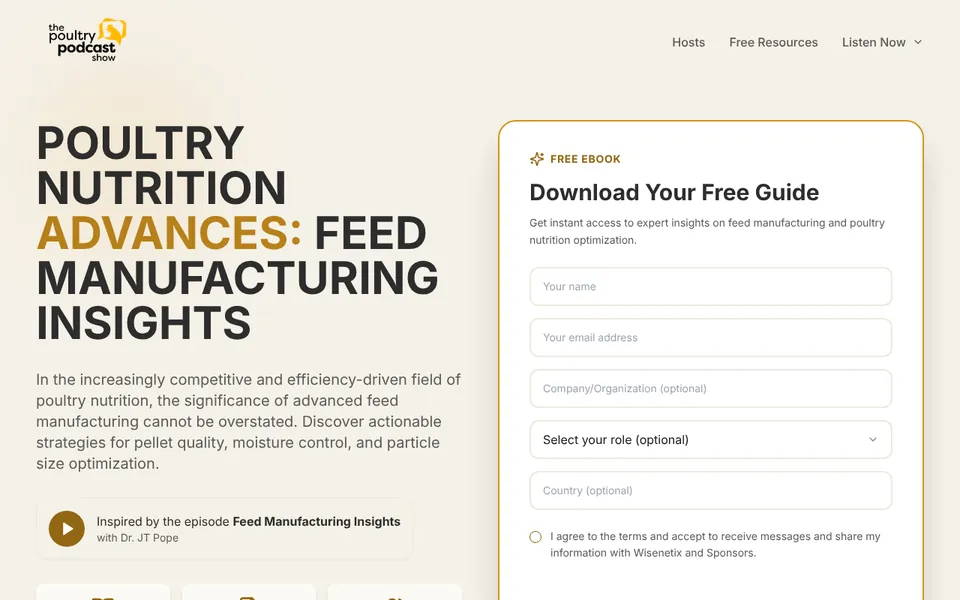
Get expert insights + a free e-book.
New episodes in your inbox every Tuesday, plus the free e-book A guide to avian influenza – Five things you should know to succeed through the recent outbreaks.
